
The Unpardonable Sin

When I was growing up, my mother told me a story that I have never forgotten. From time to time, it comes to mind and gives me pause.

She told me about a young woman she went to high school with, named Carol. Carol was a normal girl in most respects. She was reasonably intelligent, of average height, and didn’t stand out in any particular way, good or bad. This was all true, except for one rather overwhelming thing: Carol was born with a deformity that left her with a very disfigured appearance. Specifically, it caused her face to take the shape of something familiar, yet inhuman.

Carol looked like a horse.

As a result, other children—cruel as they can often be—gave her one of the most dreadful nicknames imaginable: “happy horse.” Fellow students would often make horse sounds and the like when they passed by her in the hallways. Even now, writing of this brings grief to my heart. As the years went on, the abuse hurled at her took its toll. Carol became more despondent, depressed, and anxiety riddled by the day. Ultimately, she could bear the pain no longer.

Shortly after high school, Carol decided that she had seen enough of this world and took her own life.

I mention Carol’s tragic story because, according to many, suicide is the only unpardonable sin. This is never specifically mentioned in Scripture. The thought, I can only surmise, is that suicide is “unforgivable” because the person is no longer here to repent of the sin of taking their life. As Carol’s story shows us, it’s impossible to put ourselves in someone else’s shoes. Not in this way, at least.

Is suicide really unforgivable? Does God make allowances at times, understanding the depths of despair that some people find themselves in? Personally, I do not know. I cannot say and thus, I will not. I am clearly not condoning suicide, nor would I ever suggest that it should be an option. But, again, I do not know the depths of someone’s despair and how God will treat this act under circumstances like Carol’s (and many others).

What I can say is that Jesus specifically mentioned that there is such a thing as an unpardonable sin.[1] I can also say that this horrific transgression is not suicide.

In this article, I will discuss the only sin that is specifically mentioned as being unpardonable.

_____________

The Unpardonable Sin

It’s no mystery that Jesus was often at theological war with the more corrupt Jewish leaders of his day. As Jesus put it to them: “You leave the commandment of God and hold to the tradition of men” (Mk. 7:8). This was a day-in, day-out practice.

During one of their more contentious spats, Jesus made a warning unlike any other that he had previously given them; he told them of a sin that leads to certain condemnation and was utterly irreversible. This was the “unpardonable sin:”

And there it was—all sins and blasphemies will be forgiven except one . . . blasphemy against the Spirit. Note that Jesus did not say that sexual immorality, slander, murder, stealing, suicide, or even murder were unforgivable sins. Rather, it was “blasphemy against the Spirit.” Only this is truly unforgivable. It will send one to everlasting punishment and estrangement from God.

The Pharisees had really pulled on the wrong thread though, even still, they were yet to reach this point themselves. As Elliot’s Commentary rightly recognizes:

“We dare not say, and our Lord does not say it, that the Pharisees had actually committed this sin, but it was towards this that they were drifting.”

They were dangerously approaching the dreaded territory of being beyond forgiveness, but we must now wonder why. What was this abomination of human behavior? What on earth could be that bad?

___________________

Decoding the Mystery

At this point, we already know that “blasphemy against the (Holy) Spirit” is the unpardonable sin. We now need to determine what that really means. If we look at the surrounding context, we see exactly what was at stake.

Just prior to this confrontation, Jesus had healed a demon-possessed man who was both blind and mute (Mt. 12:22). While they should have been astonished at the feat and overjoyed for the man who had been set free, they were instead angry with Jesus (as usual). Not only were they incredulous, but they raised the bar in hurling a most grievous insult at him:

It is this statement—this ultimate mockery of God’s work—that prompted Jesus to make his powerful declaration that blasphemy against the Spirit is the only unforgivable sin. The truth becomes evident in their statement, as we further examine what really happened here.

The Pharisees had attributed Jesus’ miraculous works not to the Holy Spirit who empowered him, but to none other than Satan. So, the unpardonable sin can be succinctly summarized as attributing the works of God to Satan.

Put another way, it’s the act of calling God “evil.”

Once more, Elliot’s Commentary strikes at the heart of the matter:

“. . . to see a man delivered from the power of Satan unto God, to watch the work of the Spirit of God, and then to ascribe that work to the power of evil, this was to be out of sympathy with goodness and mercy altogether. In such a character there was no opening for repentance, and therefore none for forgiveness. The capacity for goodness in any form was destroyed by this kind of antagonism” (my emphasis).

This leads us to the core issue at hand: the heart that gives rise to such wicked accusations.

______________

A Heart Problem

As is usually the case with matters of sin and salvation, it is truly the person’s heart condition that either saves or condemns them. Here, we find the same principle at play.

If we investigate the preceding context of this event, we see that Jesus had been performing numerous miracles in succession. Earlier, Jesus had healed a man with a withered hand in a synagogue, in the presence of the religious authorities and his fellow Jews (12:9-14). This event was made far more interesting due to the day all this was occurring: the Sabbath day.

The Sabbath proved to be an extremely contentious issue between Jesus and the religious leaders of the day (I discuss the Sabbath in this article). The short of it is that the religious leaders had made the Sabbath into a day of idleness—and even dread—by laying countless laws on top of the ones God had given them. As a result, even to heal someone from their bondage was an act of sin, as Jesus encountered.

In healing the man born with a withered hand on the Sabbath, the more corrupt Pharisees in the synagogue scoffed at Jesus. As a result, Jesus proposed that doing good was lawful on the Sabbath, pointing out the value of human life and bringing restitution to the sick (12:10-12). Jesus had just given someone a new life in healing his hand, and how did the Pharisees around him respond? They responded not only with indignation but with outfight treachery:

Yes—in response to Jesus saving a life, the Pharisees desired to take one. Bear in mind a critical aspect of this: they plotted to kill Jesus on the Sabbath day! While it was “evil” for Jesus to do good on the Sabbath, it was “good” for the Pharisees to do evil on the Sabbath.

Are you seeing the context of this entire issue, and how truly warped their thinking was?

Throughout this entire series of events, it’s clear that the Pharisees’ heart condition was the central issue at work. Their wicked hearts were what caused them to scoff at Jesus for doing good. It’s what made them plot to murder Jesus on the Sabbath, of all days. Most importantly, it’s what led them to say that Jesus was performing miracles with satanic power.

This is precisely why Jesus ultimately responded to them with these words:

The mouth speaks from that which fills the heart. In this, we see that “blasphemy against the Holy Spirit” comes from a truly wicked heart condition, so much to the point that good and evil are being completely reversed. This is also the height of spiritual delusion. It’s just as the prophet Isaiah said in his time:

________________

What About Us?

All this leaves us with some critical questions: How does this apply to us? How could any of us commit the unpardonable sin?

In practical application, this can play out in a multitude of ways. Anytime that God is blamed for the works of Satan, we see this spirit at work. The accusation that “God brings evil upon us” is, in essence, blasphemy against the Holy Spirit; “God is to blame for my woes. God is the culprit for the world’s evils.”

It can also be seen when God is blamed for our sinful failures; “God didn’t help me with my temptations, so I gave in. God caused me to sin.” This, while Scripture clearly declares that it is not in God’s nature to do so, nor does God tempt anyone to sin (Ja. 1:13).

However, we must always remember that such beliefs and words flow from a corrupt heart. It is the heart condition that condemns, as the actions are simply a result of one’s spiritual state.

Such accusations are hardly the things exhibited by those in right standing with God. More than that, they are the accusations offered by those who have a hatred for God in their hearts. As the Pharisees demonstrated, this also involves a hatred of our fellow man.

Any time we rejoice at the sufferings of others or despise the work that God has done in someone’s life, it reveals a truly corrupt heart. When one goes so far as to accuse God of being in league with Satan, or to suggest that God is the Great Purveyor of evil, they have displayed the truly wicked state of their disposition toward the Lord.

Only a truly corrupt heart could lead one to such brazen accusations.

In the end, we must all check ourselves daily, ensuring that no such thoughts are allowed to give birth to sin in our lives. Such things start small but, if we allow them to take root, they can produce the worst kinds of evil; they can even lead us toward the unpardonable sin.

Yes—“Woe unto them that call evil good, and good evil.”


Footnotes

[1] This is also sometimes called an “unforgivable sin” or an “eternal sin.”

A Woman’s Role—What Does the Bible Really Say?

It is no mystery that things are out of sorts in our world today.

Who am I kidding? Things are a disaster.

Perhaps nowhere is this more evident than in the way that male and female roles are displayed. The carnage produced affects literally every aspect of society but let’s simply look at marriage for a moment.

Currently, the divorce rate for first-time marriages in the US is right about 50% (plus or minus).[1] That has been known for some time now. Something lesser known is the mess that ensues after one has divorced. While some believe that subsequent marriages tend to fair better—as the people involved are assumed to be more mature, more experienced, more knowledgeable about what they want, and so forth—this could not be farther from the truth. Second marriages, in fact, have a failure rate of 67%, with divorce being the obvious outcome.[2]

Somehow, it gets worse from there. Those willing to brave “walking down the aisle” for a third time would only find success against all odds; amazingly, about 73% of third marriages now end in divorce.[3] Is it even necessary to evaluate fourth or fifth marriages? Clearly, we can see where the trends take us.

Perhaps more disturbing is that we are now seeing a world in which roughly 80 percent of divorces—yes, four out of every five—are initiated by the female partner. This is possibly a conservative estimate, as the number is recorded to be even higher among college-educated women.[4] These are eye-popping numbers, no matter how you look at it.

This is just the tip of the iceberg—as the problems among the unmarried are far too numerous to divulge here—but this should prove the point.

Something is terribly wrong with the way men and woman are getting along (or aren’t, as it were).

With this said, it seems appropriate to discuss the way that the Bible describes gender roles, particularly the way it talks about women. Clearly, this will also tell us much about men. In this article, I will tackle these important issues and hopefully bring some clarity to them.

The Created Order

Though both are equally human, men and women are not the same and are not intended to do all the same things. This was clear from the onset:

Both were human and made in God’s image, but some are “man” and others are “woman.” When we read back further in Genesis, we see a very clear picture of how the relationship between the two was supposed to function. After creating Adam (“man” or “mankind”), God quickly saw fit to add another type of human to the mix:

Note that on two occasions, the woman (Eve) was called a “helper” to Adam. This is critical.

A Strong’s points out, the Hebrew word ezer—meaning “help,” “helper” or “support”—is used in the Bible to denote assistance, support, or help.[5] However, it also adds another critical aspect of this term, which is that it “conveys a sense of strength and support, rather than subordination or inferiority.” In essence, we learn in Genesis that God’s original intent in creating women was that they should provide aid and support to men; they are to be “helpers.” Women were indeed created to assist men and to join them as being one flesh.

Women were not made to rule over men but to join forces with them.

Women were designed to be helpmates for men, for Eve came from Adam. This will come up again shortly. However—and this cannot be missed—this role does not imply lowliness or a lesser degree of humanity.

Female Roles in the New Testament

The apostle Paul had much to say about the relationship between men and women within the confines of the marriage covenant. In 1 Corinthians 7:3-4, he describes the type of union the two are to have:

First, note something that is often missed: the husband has authority over the woman’s body and, likewise, the woman has authority over the man’s body. Neither have ownership over themselves within the marriage covenant; they exchange this with one another.

This is central to the notion of the two becoming one flesh, as we saw in the Creation narrative. Jesus reaffirmed this reality in his teachings (Mk. 10:8), as did Paul elsewhere (Eph. 5:31).

Additionally, the context of this teaching in 1 Corinthians 7:3-4 involves sexual interactions. Both husbands and wives are commanded—yes, commanded—to fulfill one another sexually (7:5). Neither the husband nor the wife is permitted to lord such interactions over the other. Failing to have sexual relations within the marriage is literally to go against the very commands of God, as given through the apostle Paul.

Elsewhere, Peter gives a lengthy set of commands to men and women within the marriage covenant. After addressing the importance of inward qualities and obedient, godly behavior in women (1 Pet. 3:1-4), Peter addresses the nature of the relationship between men and women:

There is much here that could be discussed, but a couple items must be addressed. Women are commanded to be “subject” to their husbands, just as Sarah was to Abraham. On the other hand, men were commanded to treat their wives in an understanding way, having a full grasp of both her created role and her nature. Lastly, note that Peter also called a woman a “fellow heir,” speaking to their equality in salvation and their value before God.

All this is directly in line with the created order of things and the very concept of women being made as “helpers” to men: equally human, Image-bearing helpers. There is more to say in this regard, but I will cover this later when discussing gender roles in the church.

A Quick Note on the State of Marriage

Marriage is a physical union of two lives but, more importantly, it is supposed to be the spiritual union of these lives. The husband and wife have entered a binding covenant not only with one another but also with God. This was established in Creation itself, and Jesus affirmed this sacred covenant during his ministry:

Yes, “one flesh.” This was the intention from the beginning, but so were appropriate male and female roles.

Clearly, neither are now intact.

It’s abundantly obvious that many couples who enter marriage do so without ever inviting God into the relationship. Statistically, this is undeniable. A 2018 study showed that the number of marriages that take place at or within a church had dropped by half within the last decade alone.[6] It found that religious venues only hosted about 22 percent of weddings in 2017, which was down a whopping 41 percent since 2009. Instead, banquet halls, hotels, country clubs, wineries, rooftops and museums saw most couples say, “I do.”

Indeed, God has been thrust out of marriages. Is it any wonder why most either fail or operate miserably?

Women in the Church

Without question, this may be the most debated aspect of gender roles within the NT today. The church, at large, has mightily struggled to make sense of these roles. Worse, many have functioned in outright rebellion to what Scripture reveals.

On the one hand, women are given tremendous authority within the church. On the other hand, they are not given unlimited authority. Put another way—and just as it is in most other areas of life—men are largely empowered to lead, and women are empowered to support them in this endeavor.

In his first letter to Timothy, Paul gave instructions that have troubled some—most of whom being female—for two thousand years:

First, the text says what it says; it’s part of Scripture and is the truth. Second, we must understand what was really intended. The word translated here (authenteó) as “exercise authority” means to dominate, govern, or have mastery over. Most specifically, it refers to “one who acts on his/her own authority” or “an absolute master.”

This is exactly the female role that is forbidden throughout all of Scripture—a woman having power and control over a man within a relationship or spiritual endeavor. There is no discrepancy at work here. There should be no domination or mastery. This also fits exactly with what Peter revealed (above) when said that wives should be “subject”—that is, under obedience—to their husbands.

Note that both Paul and Peter ground these ideas in Genesis: Paul referencing the serpent’s deception of Eve, and Peter describing Sarah’s obedience to Abraham. Not only does this show that male/female roles were set from the earliest time, but also that Scripture is consistent throughout on the matter.

Still, women are elevated to high levels throughout the NT as well and are equally critical members within the church. Many women followed Jesus and assisted in his ministry, such as Mary Magdalene and sisters, Martha and Mary. After Emperor Claudius’ Edict of Expulsion and the church was held covertly in house churches, women often organized the gatherings. Women held prayer meetings (Acts 16:13) within the early church and even prophesied (Lk. 2:36-38). Further, women financially supported the church in crucial ways (Rom. 16:1-2).

In the OT, a woman (Deborah, Jg. 4-5) served as a faithful and successful Judge within Israel. Moreover, women were often instrumental in moving God’s plans forward in a host of ways, such as Rahab’s assistance of the Jewish people in Jericho (Jos. 2). In fact, there are far too many examples of prominent women in Scripture to list here but see this article for more.

Oh yeah—did I mention that women birth the children and are instrumental in their development? That seems rather important and worth considering.

Conclusion

I realize that there is a tremendous amount more that could be said, but this article would stretch beyond readability. I do, however, plan to cover this—and much more—in an upcoming book.

In what has been said, I hope some things have become clear. The first thing is that the notion of women being in control of men is clearly prohibited. Men were created to lead, and women were created to follow and support them. However, we undoubtedly live in a world where this is seldom the case. There are just so many reasons for this, and a comprehensive discussion would include the role that feminism has played in society, the effects of dating apps and social media, and the overall godlessness that now exemplifies our culture.

Overall, the problem is best seen in the elevation of women and the devaluation of men. And be sure of this: both genders have joined forces (for once) to create this cataclysmic situation.

As I often say, most men cannot lead . . . and most women would never let them.

Second, it is clear that men and women are also set to occupy different roles within the church. Women are not permitted to hold authority over men, which certainly means leading the congregation as something like the lead pastor, bishop, superintendent, and other positions of high authority (which are worth discussing internally). However, women are a crucial part of the church; they organized prayer meetings, hosted house churches, prophesied, showed feminine hospitality, supported the leaders of the church, and most definitely are critical in the task of raising/leading children.

Finally, the Bible is clear throughout that men and women are both made in the image of God and, as such, are equally human and have equal value before both God and man.

When men and women fill their created roles and come together in submission to God, beautiful things can happen. Relationships can prosper. Families can flourish. The church can be strong and resilient. Life can be fulfilling, and societies can prosper.

If only we lived in a time when this happened with any regularity.

In closing, I leave you with these exhortations, and I can only pray that you follow them. Men—be men. Women—be women. And may all serve the Lord Jesus Christ in solidarity.


[1] Bieber, “Revealing divorce statistics in 2024.”

[2] Ibid.

[3] Ibid.

[4] See Yenor’s article, “Divorce and Toxic Femininity.”

[5] See Strong’s, “ezer” (5828).

[6] See Lupfer, “Fewer couples are marrying in churches. Does it matter?”

Sinful Living is Unacceptable

Not long ago, I wrote an article entitled “Go and Sin no More.” This, of course, is what Jesus told the woman who had been caught in adultery and was saved from being stoned to death.

However, it is abundantly clear that there is a dearth of teaching within the church against sin. In fact, there are more voices today telling people that sin is completely acceptable than are opposing it.

Still others would say that pointing out sin in another person’s life is to condemn them. It’s just the opposite; addressing sin is done so the person might avoid being condemned.

Really think about that.

You see, when Jesus convicted the woman caught in adultery of her sins, he was doing the most loving thing imaginable. He was giving her an opportunity that no one else had or ever would. He offered her the path to repentance, forgiveness, a changed life, and everlasting salvation.

As I share some of the almost innumerable commands in Scripture pertaining to obedience and leaving sin, try to bear this in mind.

____________

The Necessity of Avoiding Sin

Scripture could not be clearer that believers are to avoid sin. This concept is layered throughout the Old Testament but, since we are followers of Christ under the New Covenant, we can see this theme in spades throughout the New Testament.

To be sure, it would be nearly impossible to cover every teaching on this topic. We can certainly cover some of the more powerful ones though.

Let’s start with Jesus. It was already mentioned that Jesus told the woman caught in adultery—after saving her life—exactly what she needed to do: “From now on do not sin any longer” (Jn. 8:11b). He made the same remark to a man who had been ill for thirty-eight years, after healing him (Jn. 5:14).

In the Sermon on the Mount, Jesus went through a litany of OT teachings and intensified them for his followers. Among these is the seventh of the Ten Commandments, which is against adultery. In addition to making adultery an internal act rather than strictly an external one, Jesus explains that one must get rid of anything that causes them to sin:

The implication, of course, is that a continued life of sin will lead one to hell. This is stated as clearly as possible, as anything that is causing you to sin must be eliminated. Otherwise, hell awaits.

Moving on to the apostles, they had plenty to say on the matter. Paul, for example, made it clear that a sinful lifestyle is utterly unacceptable:

He goes on to reveal that many of the believers in Corinth (and everywhere else) used to be on that very path. However, he clarifies for them: “But you were washed, you were sanctified, you were justified in the name of the Lord Jesus Christ and by the Spirit of our God” (6:11b).

Those who will inherit the Kingdom of God do not live as slaves to sin, because they were washed, sanctified and justified.

Speaking of being slaves to sin, observe his clear teachings in Romans 6:1-4:

He further emphasizes the main point of what Christ’s life and death now means for the believer, saying:

Our old self was crucified, along with its passions and desires. The body of sin was “brought to nothing” in Christ, and sin is no longer our master.

Like Paul, the apostle John made this clear in more places than can be mentioned here. One of the most important teachings given by John reveals that habitual sinning—the practice or lifestyle of sinning—is not acceptable among the people of God.

Much of John’s writings present warnings and exhortations about avoiding sin. Understand that, logically, such things are absurd if it is acceptable to remain in it. As we have already seen, no case can be made for this. Here is another example from John’s writings:

Again, the expectation to avoid sin is clear. John makes sure to mention that sins can be forgiven through Christ, our advocate with the Father. This, as he pointed out in 3:9 (above) does not give us license to remain in the practice of sinning.

Taking the Bible as a cohesive whole—all of which being inspired by God and true in its teachings—the author of Hebrews goes further in explaining this matter. Not only is the continued practice of sinning unacceptable, but there is actually a point where one loses salvation because of it:

For those who have read the preceding passages and believed they found loopholes for sinful living, Hebrews closes that door. Yes, there is a point of no return. It is not necessary to have an explanation for where that point is, as some will request. The point where one has allowed their sinful life to disqualify them from the prize is known by God.

It is our task to ensure that we do not flirt with this line.

There are so many other passages that could be mentioned, but this article would be outrageously long. Besides, the point should be clear to anyone who is being honest with themselves. Unequivocally, habitual sin is strongly forbidden and, at some point, it can cost us our very salvation.

But sure, continue to believe (and tell others) that sin is acceptable.

________________

But Everyone Sins!

The last comment leads us naturally to this section, which must be addressed.

Virtually any time that sin is being vigorously preached against, some within the church who hear it are bound to chime in with any number of responses. All of them, mind you, lead to the same conclusion and come from the same heart condition.

There is, of course, some manner of truth in these statements. It is true that Jesus alone rescues us from our sins, as he did what none of us could ever do in atoning for the sins of the world. However—and as I have discussed at great length in this important video—Christ did not do our obedience for us.

We still have a very significant part to play in salvation.

The problem with these types of remarks—aside from being half-truths, at best—is that they come from a corrupt place. This is the place that seeks to ask, “how much can I get away with?” Put another way, these are almost always things people say to justify their own sinfulness.

I should know, as I once used similar expressions myself. There’s no way that we can really live apart from sin, right? Paul, John, and the other NT authors didn’t actually mean we are supposed to, you know, leave habitual sinning, did they?

Certainly, Jesus wasn’t commanding us to live truly holy lives! Was he? . . . was he??

As previously demonstrated, the answer to these questions is abundantly obvious. Obvious, that is, to anyone who is allowing Scripture to speak for itself. In case their words weren’t clear enough, let me state this plainly:

The Christian is called to leave a life of sin and, instead, to pursue a life of holiness.

While Scripture clearly delineates (as shown) between falling short at times and living in habitual sin, it is undeniable that the latter is strictly prohibited. Only those who wish to remain in their sins object to this reality.

____________

Conclusion

It seems to me that the most important thing the church could be focusing on these days is exactly what it most ignores. Worse, it’s the very thing it goes out of its way to excuse.

This, however, is only the practice of the apostate church. The Bride of Christ—that is, the remnant of true believers who walk the narrow path—neither live in perpetual sin nor condone such a practice. This is to live and promote a lie, and we know this is not the way for a genuine follower of the Lord:

Pretty simple; undeniable, even.

The plain truth is that we are doing our brothers and sisters in Christ a disservice—perhaps of the worst kind—by failing to preach against sin. We are fast-tracking them to the gates of hell, helping to ensure they receive a spot in the place “reserved for Satan and the demons” (Mt. 25:41).

Does this mean that the genuine believer will never commit another sin the rest of their days, as so many who wish to continue in sin will quip?

No, it doesn’t.

What it means is that we should make every effort to do so and, without question, that we must leave behind our habitual patterns of sinful behavior. We must do so, and we must teach others to do the same. In conclusion, I urge each person reading this to strive for holy living.

Stop telling yourself and others the lie from Satan, which is that sinful living is inevitable.

As Scripture reveals, it is not inevitable. More to the point, sinful living is unacceptable among those born of God. We cannot persist in sin, nor approve of those who do so.

Make today the day that sin no longer rules over you.

Decoding the Thief on the Cross

To be sure, there is no shortage of misunderstood and/or misapplied passages of Scripture. Near the top of that list, we find the account of the Thief on the Cross.

Whether it is being used to suggest that believers don’t need to be baptized, that obedience is unnecessary in salvation, or even that we die and go to heaven as disembodied spirits, this event is probably one of the most popular within all of Scripture.

In this article, I am going to explain exactly why the passage cannot be used to prove any of the previously mentioned beliefs. Further, I will explain what the passage can teach us, as well as what we can understand about the events of the story itself.

Let’s start with the latter and work our way backwards.

________________

The Background

Only the Gospel of Luke contains the events surrounding the Thief on the Cross:

While the figure who responded favorably to Jesus is popularly referred to as the “Thief on the Cross,” we do not know with certainty that either of the criminals were indeed thieves. Some have supposed that,[1] but we only know they were criminals who were likely being crucified for crimes against the empire.

For this reason, I will now refer to this individual simply as a “criminal” rather than a thief.

Just prior to this passage, Jesus is being ruthlessly mocked and belittled by the Roman soldiers and other bystanders. It is then that one of the two criminals takes his shot at Jesus, questioning his messianic title and his ability to overcome the dire predicament. This is when the key part of the account takes place. The other criminal took to Jesus’ defense, admitting his own guilt, proclaiming Jesus’ innocence and, most importantly, showing his belief that Jesus is indeed the world’s Messiah: “Jesus, remember me when you come into your kingdom.”

As a result of the man’s faith, Christ responds with this affirmation: ‘Truly, I say to you, today you will be with me in paradise.”

________________

Misapplying the Text: Baptism

Now that we have a brief background in place, we can evaluate how this passage has been understood over time. As previously mentioned, this event is used to promote a wide variety of teachings that it simply does not support.  

Let’s start with the issue of baptism. For ages, people have pointed to the criminal as evidence that one does not need to be baptized to be saved.

The argument always goes that, if baptism is required in salvation, then the criminal could not have been saved. Since the text clearly illustrates that he was, baptism cannot be necessary.

The problem with this view is that it uses a rare exception—a biblical anomaly—to prove a general rule for how salvation operates. In other words, something that may be true in a particular instance does not make it universally applicable to all people and in all generations.

Regarding baptism, we would need to look at passages that are intended to instruct believers as a whole. There are indeed explicit commands that those who have placed their faith in Christ need to go and be baptized. For more on this, I have written extensively about the necessity of baptism here.

This gets us to the final point about using the criminal to prove that baptism is unnecessary. If we are talking about entry into salvation—that is, how one initially becomes saved—then it is accurate the baptism is not necessary. The criminal does prove that. However, here is the problem: for nearly all people, there is a life to be lived after conversion.

Put another way, there is the process of abiding in salvation. I have made a very helpful video (I think) that discusses our part in salvation.

The short of it is that, had the criminal been able to continue with his life, he would have been expected to be baptized just like all other believers. Since he died that very day, there was no opportunity to do so. Given this situation, it is not exegetically forthright to apply the criminal’s experience to those—that is, virtually everyone else—who continue to live after conversion.

____________

Misapplying the Text: Obedience is Unnecessary

Another thing the event is used to prove is that salvation has nothing to do with our obedience to Jesus. Since the criminal had lived a life of debauchery—as we at least assume—and was saved simply through his belief in Jesus in that instant, some reason that our salvation has nothing to do with our obedience.

Now, this is part of a greater doctrine that is derived—completely erroneously, in my understanding—from various passages of Scripture. It is often called “Free Grace” or “Hyper Grace” theology. I show the heresy in this doctrine in the same video mentioned above in regard to baptism.

(Please see that video if you want more details about the Free Grace doctrine. I believe this to be the greatest heresy going today.)

The simple truth is that using the criminal to prove that obedience is unnecessary in salvation fails for the very same reasons that the baptism argument does. This event is a biblical anomaly, where an individual placed his faith in Jesus but did not have the chance to continue living. The Bible is replete—absolutely loaded—with clear teachings proving that both faith and obedience is necessary in salvation.

My article on faith and works illustrates this clearly.

As with the baptism example, this would only be the case for those who never had a chance to live after conversion. In other words, we would be dealing with “death-bed conversions” almost exclusively. While there are no true statistics to look at on the matter, we understand such events to be exceedingly rare.

Those who reject Christ throughout their lives rarely see the light in their last days or hours, largely because a hardening of the heart has taken place by their consistent and willful rejection of Jesus.

______________

Misapplying the Text: The Soul Departs to Heaven at Death

There is a final belief that this passage is used to promote, and it’s a great deal more complex. This is the view that, because the criminal is thought to have gone directly to heaven (paradise) immediately following his death, that all believers also do so. This belief is based upon the following verse:

I have covered the full context of this declaration and the issues with how it’s typically understood extensively in this book. To fully understand this problem, it takes a great deal of unpacking.

However, let me briefly summarize some of the key problems and provide other articles I have made specifically on these topics. The first—and really, the biggest—issue is that the overall biblical teachings about the afterlife contradict the idea that believers die and instantly depart to heaven. Likewise, Scripture does not teach that non-believers die and immediately depart to hell.

Overwhelmingly, the Bible—from front to back—teaches that death is the absence of life, and that death is best compared to sleep. The sleep comparisons cannot be missed (see this article), and we can understand the main reasons why as follows:

  1. Both (death and sleep) are unconscious modes of existence.
  2. Both are characterized by the lack of temporal recognition.
  3. Both are merely temporary in nature.

The second issue with this view is that it makes the resurrection events (Jesus’ aside) recorded in Scripture both meaningless and illogical. As I explain in this article, titled Jesus Wept. Lazarus Should Have, Jesus would have been doing the numerous people he raised from the dead a terrible disservice: if, that is, they were actually living in a place of bliss after death.

They would have been living in a more preferable existence (like heaven), only to be put back on earth to later die again.

Another problem is that the passages that are seen to suggest immediate life somewhere after death are often contradictory, if taken this way. In this article, I show why one cannot put such passages together to form a coherent view of the afterlife. Simply put, we cannot go to Abraham’s Bosom and heaven/paradise at the same time.

This is a major problem.

Finally—and I could mention many other issues (again, check this book)—the very idea that “we” are something like a soul trapped within a body is both unscriptural and illogical. Among the myriad problems with this view is what I call “soul damage.” That is, if we are really immaterial souls living within a physical body, then our personalities should not be affected by physical issues like brain trauma.

This is a deep issue, so I also have a blog covering this.

For all these reasons—and those not mentioned here—using the criminal on the cross to prove that all believers die and go to heaven is not exegetically sound. This is not to mention the fact that, like the matters of baptism and the necessity of obedience in salvation, we cannot use a biblical anomaly to prove the general rule about anything.

______________

Conclusion

If the previous beliefs cannot be justified in the account of the Criminal on the Cross, then what can we really learn from it?

First, we do learn that placing one’s faith in Jesus as Lord is the entry point—again, the entry point—into salvation. In that event, we are justified (declared righteous) in God’s sight and our sins are forgiven. Faith alone forgives sins and ushers us into God’s family.

However—and I simply must emphasize this again—that is where the process begins. As I point out in this video, we then must, as Jesus said, carry our cross and follow him (Mt. 16:24). The criminal proved how salvation begins, but he was unable to show us how it continues.

Another thing the story shows us is that it is possible to repent and turn to Christ late in life, even for hardened criminals and those near death. As previously stated, I do not personally believe this occurs frequently. This is chiefly because we often become too hardened to do so in consistently rejecting God. However, we do see that it can be done through the criminal’s miraculous turnaround, as well as through select others we have observed.

Lastly, it proves the overwhelming mercy that God has upon humanity. Even those who reject Him throughout their lives can—unless reprobate—be accepted into the Kingdom if they so desire to humble themselves before the Lord.

In summary, the account of the Criminal on the Cross is truly miraculous and empowering. If we are careful not to mutilate its meaning, then we can gain great insight and comfort in the man’s salvation, what it means about us and most importantly, what it tells us about the mercies of God.


[1] See the Pulpit Commentary: “Many commentators suppose that these, were companions of that Bar-Abbas the robber who had just been released. They were not ordinary thieves, but belonged to those companies of brigands, or revolted Jews, which in those troublous times were so numerous in Palestine.”

A Cold Wind is Blowing: Narcissistic Behavior and the Last Days

We were told that it would come to pass, and here we are.

Nearly two thousand years ago, the apostle Paul wrote to his protégé, Timothy, warning him—and all who would later read his letter—about the evil behavior that would be rampant in the last days:

There can be no clearer and more definitive description of narcissistic behavior than this passage. It hits every note and leaves nothing to be desired.

I have already done a deep dive into the finer details of this passage elsewhere. In this article, I wish to describe the phenomenon of these traits and generally describe the dire consequences of our current situation. The rampant increase in toxic human behavior—chiefly as it is seen and described in the term “narcissism”—is one of the most alarming developments on the planet.

We live in perilous times, and human behavior has scarcely ever been so evil.

_____________

Trust Your Senses

Rest assured that every one of us—yes, everyone walking this planet—has encountered narcissistic individuals. The reality, however, is that most of us never identified them as such.

We thought the person was “mean” or “insensitive.” We likely dismissed them as simply being difficult to get along with, a common jerk. While these types of people no doubt exist, many that we encounter are something altogether more devious. If you recall the characteristics mentioned in the passage above (2 Tim. 3:1-5), we see that the rabbit hole goes much deeper.

Certain individuals we have come across poked fun and made degrading comments at our expense, but they were “only joking.” They criticized us “for our own good.” They triangulated us with those in their proximity—with coworkers, friends, family members, former romantic partners, and many from the opposite sex—to invoke jealousy and insecurity within us. They regularly pulled away on a whim, either giving us silent treatment or stonewalling us. They pushed our boundaries to the limits and made us question our very sense of self.

Strangely, the rollercoaster of emotions made us want to please them even more.

Whenever they knew they had pushed a little too far—energetically sensing that we were pulling away from them—they chose to give us a glimpse of the things we had liked about them in the beginning: the things we experienced during the “love bomb.” We once more saw their charming smiles, infectious laughter, romantic gestures, affirming compliments, and warm validation. In doing so, they breadcrumbed us back in for another round of abuse.

So went the cycle, over . . . and over . . . and over again.

When they finally realized that there was nothing left to take from us, they instantly discarded us for the next opportunity: for the person or situation they had been setting up behind our backs throughout the course of the relationship. Either that, or they forced us to reverse discard them because we just couldn’t take any more of the abuse. They still went on to the next opportunity, as though we never existed.

Does this scenario sound familiar? Chances are, you have either experienced this for yourself or are well-acquainted with someone who has.

This is the behavior that is now rampant within our world. This is the product of those who are “lovers of self, lovers of money, boastful, arrogant, slanderers, disobedient to parents, ungrateful, unholy, unloving, irreconcilable, malicious gossips, without self-control, brutal, haters of good, treacherous, reckless, conceited, lovers of pleasure rather than lovers of God.”

If you have noticed this type of manipulative behavior around, and that it seems to be growing, then I have this to tell you: trust your senses.

_________

Trust the Numbers

Not only is the rise in Narcissistic behavior predicted in Scripture—and is far more prevalent than it ever has been—but it also proves itself out in the numbers.

Some of the world’s leading experts on Narcissism are now stating—from a purely clinical perspective—what those with spiritual discernment into the matter have been shouting for some time. While it once sounded insane to suggest that upwards of 15-20 percent of the population are full-blown narcissists, it is now openly being stated by those with the “respected degrees” to prove it.

Of particular note is Dr. Ramani Durvasula, who has counseled thousands of people who display tremendous amounts of narcissistic traits. She describes NPD—Narcissistic Personality Disorder—as a “personality style” rather than a diagnosis. In other words, our concern should not be with who is professionally diagnosed—since few ever are—but with the behavior we see around us every day.

For this observation, I genuinely salute her. Behavior is what truly reveals one’s personality rather than a clinical diagnosis.

In her extensive professional opinion, the true number of people who exhibit enough traits for us to consider them a “narcissist” is a staggering 15-20 percent. In case those percentages are not registering, let’s look at this another way. When you are out and about on a daily basis, roughly 1 in every 6 people you encounter is a narcissist. While it can vary depending on the demographic, this would generally be our collective experience.

Worse, these figures don’t include the much larger number of people who exhibit many narcissistic traits but aren’t necessarily far enough down the path of darkness to warrant the title. This makes sense, as narcissistic traits are essentially evil traits: the characteristics portrayed by corrupted humanity who has neither repented nor been transformed by the power of the Holy Spirit.

I talk extensively about this issue in this video.

Does this mean that narcissists are now all around us, and that we are encountering them on probably a daily basis? Well, yes—yes it does.

_____________

A “Chilling” Conclusion

During his ministry, the Lord himself addressed the increase in unloving and unaffectionate individuals that will appear at the end of the age. When the apostles explicitly asked him: “Tell us, when will these things be? And what will be the sign of Your coming, and of the end of the age?”, one of the items Jesus mentioned was this:

We could spend time discussing how lawlessness has increased, but the latter part has more bearing on this discussion.

The phrase, “will grow cold,” is an especially interesting one. The term from which this word is derived is psuchó, and Matthew 24:12 is the only time it’s used in all of Scripture. It is a future tense term that is more basically translated as “to make cool,” but it can be more deeply described in this way:

a spiritual energy blighted or chilled by a malign or poisonous wind.”

Imagine a cold wind of demonic power blowing across the earth which literally puts people’s love on ice. This is what Jesus said will occur in the last days.

Also notice that Jesus said most people’s love will dissipate in such a way. He did not say a few, some, or another parallel statement; he said that the majority of people will be affected.

As I have been trying to illustrate, we now live in such a world. We do not need to wait for another day or a time in the future; Narcissistic behavior is utterly rampant.

As I previously said, trust your senses. If you don’t trust your senses, then trust the numbers. If trust neither your senses nor the numbers, then at least—I implore youtrust the words of Jesus and Paul. If you trust none of this, then there is an excellent chance that you are one of the people that I have described within this article.

To those with eyes to see and ears to hear, I leave you with this message. Understand that the days Paul warned Timothy about are now upon us. A “spiritual energy”—one chilled by a malign or poisonous wind—is fully at work within our world.

Look to Christ, hide yourself within him, and walk the narrow path. He is our only protection from the Narcissistic creatures around us.

The Greatest Heresy

For many years now, I have observed a great heresy growing within the church.

If you are familiar with my articles or books, then my exposure of heresies will come as no surprise to you. However, this is one unlike any other I have spoken against. In fact, I can safely say that—in my estimation—it’s the greatest heresy in all the world.

What if I told you that you can be saved while choosing to live a life of decadence and debauchery?

What if I said that we can abide in Christ while satisfying every carnal desire of the flesh?

What if I guaranteed you that there can be the everlasting assurance of life in God’s Kingdom, even if you chose to follow Satan and make sacrifices to the Baphomet on his behalf?

Naturally, I would never—Lord forbid—make such blasphemous and heretical claims. However, there are plenty of pastors and church leaders that are now doing that very thing.

Worse yet, these beliefs are becoming the normative “Christian” understanding of salvation. The Great Heresy of our time—and perhaps, of all time—has been around since the early church but is now reaching a fever pitch.

Its name? Free Grace Theology

(This is otherwise known as Easy Believism, or Hyper-Grace Theology).

In this article, I am going to describe to you the basic tenants of Free Grace theology and allow some of its many proponents to blow your mind with its logical implications. Afterwards, I will make a succinct case as to why this view is not only demonstrably false but is nothing short of Satan’s handiwork.

_____________

What is Free Grace Theology?

Free Grace theology, like any theological movement, displays a fair degree of diversity in thought and nuance. However, it’s imperative to stay on task and discuss the central tenants of the perspective.

The main pillar of Free Grace theology (FG, from here on) is that belief in Jesus alone saves and that nothing we do has any bearing on salvation. Thus, salvation is a free gift that is given to a person simply based upon their belief in Jesus and that belief alone. Here is how Free Grace International—a very prominent group that promotes this doctrine—summarizes this:

Note the statement that our lives should look different once saved but are not required to. This will come up again in a later section (though you may already see the problem.)

Herein lies the crux of the argument. Pulling on specific verses or passages of Scripture, Free Grace proponents hold that salvation is obtained by believing in Jesus and has nothing whatsoever to do with our obedience, a visible change in lifestyle (i.e. transformation), or the manifestation of spiritual fruits. Below are a couple of the verses that are popularly quoted, though there are others:

Moreover, salvation cannot be lost and is a guaranteed promise for all who have believed in Jesus. However, “belief” is a rather nebulous term in FG theology. While this is one of the nuances of the doctrine, it essentially means to accept the proposition that Jesus is Lord and that he died for our sins.

In other words, it is largely a mental acknowledgment and does not extend further into placing one’s ultimate trust in Christ or some stronger definition that would include action.

_____________

The Many Problems

To be sure, FG theology appears—at first blush—to not only be appealing but to even be consistent with Scripture. They do quote the Bible to make their case, after all.

However, the devil is once again in the details.

There are so many problems and so little time. Let me summarize several of them, and then point you toward the video resource I recently put together. The first problem is that FG theology is based upon isolating certain verses that fit their needs while either ignoring or distorting the ones that don’t. This practice is sometimes called “cherry-picking” in the theological community, and FG proponents are masters at it.

For example, they are eager to quote any passage the speaks about belief as being the only prerequisite in salvation but make no mention of the ones that describe additional requirements. For example, texts like John 3:16 and 3:36 are quoted because they speak only about belief, while texts that speak about the need to repent and/or be baptized—such as Mark 16:16 or Acts 2:38—are completely neglected. To them, repentance and baptism would be a “work” and, thus, would not be necessary even though the plain reading of the texts require it.

Speaking of works, FG proponents are happy to quote a text like Romans 3:28 but will openly ignore a text like James 2:24. The reason is simple: while Romans declares that justification comes by faith apart from the “works of the law,” James declares that a person is justified by both faith and works.

Based on their understanding of Scripture, the two verses are completely contradictory.

In reality, however, they are not at all. One only needs to understand that Paul was talking specifically about the “works of the law”—that is, the Mosaic Law of the OT—and not about all actions believers may be required to undertake. I explain this in detail within this video. In any event, they cannot make this distinction either because then, Paul’s words wouldn’t provide evidence in favor of their view. They must distort the meaning of passages that don’t align with FG doctrine, if they don’t outright ignore them.

This gets to the second problem I will address here, which is that they simply distort passages that don’t fit their agenda. James 2 is a great example. Instead of seeing James’ clear case that action must accompany belief in salvation, they twist the context to suggest that James was referring to being disciplined by God or not being approved by men for their lack of works.

Another example would be Matthew 7:21-23, which discusses the many people that will be turned away by Christ at the end. They actually make the case that the ones being condemned—who Jesus “never knew”—were the ones who thought their own works and obedience were necessary in salvation. You heard that right; those to whom Jesus will declare, “I never knew you; depart from me,” are individuals who believed their works factored into salvation.

This is a common FG view, even though the passage makes it clear what Jesus was talking about:

In declaring that these people were “workers of lawlessness,” it is clear that they were condemned for practicing corruption. So, in truth, this passage is saying precisely the opposite of what the FG camp thinks; evil works can condemn someone, even though they believe in Jesus. While they were doing good in the name of Jesus, they were evidently practicing evil in many aspects of their lives. This perfectly explains how many can be involved in ministry and claim Jesus their entire lives yet be rejected at the end.

After all, many are called but few are chosen (Mt. 22:14).

A third problem with FG theology is that they clearly confuse entering salvation with remaining in salvation. Since they love to use the account of the criminal on the cross (Lk. 23:39-43)—which is an anomaly and not a general teaching—to prove that all people can be saved by belief apart from action, I shall turn this example on them. It is true that the criminal entered salvation by virtue of his faith in Jesus, without having to bring obedience or good deeds with him.

However—and I can’t say this strongly enough—if the criminal had somehow been removed from the cross to live for some period of years afterwards, he would have been expected to be obedient and to produce fruit. In other words, entering salvation has nothing to do with our deeds but remaining in salvation certainly does.

This is precisely why using the criminal on the cross to prove anything about the general nature of salvation, the need (or lack thereof) to be baptized, etc., is a terrible hermeneutical practice.

Another way of characterizing this problem is to note that they make a hard break between justification and sanctification, to the extent that there is little or no connection between them. Justification is when we are declared righteous before God and our standing is instantly changed; apart from any additional works of our own, we have asked Jesus into our lives and, thus, have entered salvation through faith in him. This is what occurred with the criminal on the cross.

Sanctification, on the other hand, refers to the process of being made holy. This is the lifelong effect of cooperating with God to become more like Christ, and it absolutely involves dedication and obedience on our part.

There is much more that could be said about these concepts, but this provides a good summary of what is involved.

To FG supporters, sanctification need not ever exist in salvation. Being made holy is completely about the rewards we will receive in this life and the next, but it has nothing to do with being saved. They will sometimes describe any change we might show as a matter of discipleship, which is—surprise, surprise—advised but not required.

One would participate in discipleship to live a better life, to be of service to others, and to receive greater rewards . . . but it would not be done because it is necessary in salvation.

One final problem worth mentioning—while there are many more possibilities—is that Scripture is replete with crystal clear examples of where obedience, good works, and the need to bear fruit is both commanded and said to be essential in salvation. There are so many examples to mention that a separate blog would be in order. Fortunately, I have written such an article already. I refer you there if you need the evidence.

Overall, the FG perspective is highly selective, disingenuous, and demonstrably antithetical to the overall narrative of Scripture.

_____________

The Horrifying Implications

There are excellent reasons why I am so dedicated to exposing the Free Grace heresy for the deception that it is.

This perspective is the epitome of a false gospel, though they believe that Lordship Salvation—the view that Jesus must be the Lord of your life and that salvation must be accompanied by a transformed life—is the real heresy.

The Free Grace doctrine, then, is one that can lead to eternal damnation.

I do not say this lightly. Obviously, not every false teaching—or even every heresy—is a salvation issue. This, however, most definitely is. In fact, it’s the epitome of a salvation issue. This involves the very nature of salvation itself. If—as I have shown, and Scripture is clear about—salvation must result in a changed life, then accepting the Free Grace view can easily lead one to condemnation. Remember the quote from Free Grace International:

This, of course, means that one can technically continue to live a corrupt life—as I will show, a very corrupt life—without ever jeopardizing their salvation. Sure, transformation is preferable . . . but if it never happens? Ehh, so be it. There is a brutal reality attached to this:

If one truly believes they can be saved while persisting in a morally depraved life, then a morally depraved life one will live. It’s that simple.

This is the heart of the problem with Free Grace theology, and it’s the worst of all imaginable issues. However, let me very briefly show you how deep the rabbit hole descends.

On one of the countless videos about FG theology made by pastor Jesse Martinez on his YouTube channel, Bibleline, I asked if one can become an utterly rebellious apostate and still be saved, so long as they “believe” in Jesus. Here was his response:

Don’t believe me about this exchange? Here is a screenshot I took of his response:

On another occasion, I asked the popular FG YouTuber, Ono Diamante, if a saved believer can endlessly live a life of sin. Here was his response:

Here is the screenshot for that one:

Forgetting the condescending tone—which assumes that I am transgressing the laws of God everyday—Ono responded in the affirmative; yes . . . one can perpetually sin every day, and in all ways, but continue to be saved. No change or transformation ever needs to take place.

However, this cloud gets darker than you can imagine. Shawn Lazar—one of the leading “lights” (if you can call him that) of the FG gospel—made an astonishing admission in a debate about the nature of salvation. When asked if a person who believed in Christ as a child can later become a “God-hater” and a “satanist” who makes “sacrifices to the devil”—while still retaining his or her salvation—Lazar said this:

Lazar went on to explain that one can lose many of their heavenly rewards and much of what they have on this earth. But salvation itself? Never. Just believe for one moment that Jesus is Lord, and you can proceed to live as a satanist every day after.

In truth, I could share quotes like these for days, but I hope the point has been made.

Before concluding this section, I simply must point out an astonishing aspect of FG theology. Recall the earlier discussion about Matthew 7:21-23 and consider this. In their warped view of theology, the only thing that can disqualify someone from salvation—provided they believed in Jesus, if only for a moment—is to also believe that we must display a transformed life. That’s right: one can make sacrifices to Satan and retain their salvation, but they may not believe they are required to be obedient or produce fruit and retain it.

Really let that one sink in.

You may be wondering how anyone can believe, much less teach, such things. I mean, how can they go so far in affirming wicked behavior while condemning good? The answer is simple: they have to. If even a single work—much less a collection of works—can alter one’s salvation at any point, then works indeed have a part to play. For this reason, it must be possible for a saved individual to perform the most heinous crimes imaginable, and for as long as desired, without the fear of losing their salvation.

Alternatively, it must also be true that one could go their entire lives without doing a single good deed for the Kingdom and still participate in the resurrection of life (Jn. 5:28-29).

After all—and as they so often ask— how could anyone have assurance of their salvation if obedience is required? The better question is, how anyone can have assurance without it?

____________

Conclusion

I will keep this short, because much has been said already.

As I have demonstrated, the Free Grace movement is an abomination. It perverts the true Gospel of Christ, replacing it with the gospel of Satan. The matter could not possibly be more dire, either, as salvation itself is at stake. This is exactly why I believe—with all my heart—that the Free Grace/Easy Believe gospel is the most heretical teaching going today.

Do we need, as Christ and the apostles to clearly taught, to demonstrate our faith in action? Or, as the Free Grace crowd posits, can we make sacrifices to Satan all the way to the “pearly gates?”

Each time the fanciful pleas of the Free Grace heretics woo and entangle another convert to an unscriptural and illogical doctrine, I cannot help but see a glimpse into the hidden darkness where the Evil One resides.

There, in that darkness, he revels in the thought of this new child of wrath: a new son or daughter who believes they can act like Satan while being secure in Christ.

He counts the fruits of his labor, and smiles.

In closing, I pray you: do not fall victim to the Free Grace heresy. Do not take the broad path that most are on today. Instead, follow the narrow path that leads to life. Abide in Christ, obey his words, and demonstrate your faith in obedience to him.

Your salvation depends on it.

The Eye Sees All

You’ll see it on magazine and album covers, on product pictures, on TV shows, in music concerts, and certainly within the logos of many major companies. The “eye” is all around us.

This is made manifest in those who intentionally wink, cover one eye, or otherwise darken or emphasize one eye for all the world to see.

But have you ever stopped to think about why this is done? Better yet, have you even noticed this phenomenon to begin with? I mean, what is the world’s obsession with emphasizing one eye?

In this article, I am going to explain to you exactly why we see this symbol all over the globe. Further, I will reveal the incredibly dark meaning behind it.

____________

The Eye in Culture

Before revealing the true nature of the eye, I want to provide some of the literally endless examples that could be shown to illustrate how prevalent it is within our culture.

While strolling through your local makeup or fragrance store, you are guaranteed to encounter it.

If you take a stroll around the local department store, you may find many eyes on you.

Note the 666 hand-sign while covering the eyes. This is a very prevalent way to emphasize the eye.

As you scroll through your social media news feeds, the eye’s gaze will again be fixed upon you.

Speaking of entertainers, you’d better believe that y0ur favorite stars of stage and screen are in on it. All of them.

Grimes

Taylor Swift

Usher

Bob Dylan (note the hidden hand of Freemasonry, also)

Neil Young

Kesha

Katy Perry

Marilyn Manson

Marilyn Monroe

Don Cheadle demonstrating the all-seeing eye, along with the 666 hand-sign and the Freemason’s vow of silence.

Jennifer Aniston with the devil’s horns and winking to reveal the one eye.

Don’t tell me this stretches into “Christian” entertainment, too.

Yes, it does.

But what about the world of sports, is the all-seeing eye pervasive in that sphere as well? Certainly.

Super Bowl and CBS logo in 2024.

Jamarr Chase

Usain Bolt emphasizing the one eye and showing his Masonic ring.

Kevin Durant

James Hardin

Fine, Fine! So, maybe the all-seeing eye is everywhere within our world. At least it hasn’t reached our children yet, right? Wrong. Observe some of the children’s artwork that I have photographed at fairs and exhibits over the years.

Do you see that the eye is ever prevalent within our society, from top to bottom? If this has (somehow) not sufficed, then I will later provide links to view far more examples. For now, let’s move on to discussing what this symbol is truly about.

______________

The All-Seeing Eye

Clearly, the one eye is ubiquitous within our world, but the question remains: what does it mean?

You should not be surprised to know that the symbol—most known as the all-seeing eye—goes as far back into history as we can see. It existed in every culture of the world, in one way or another, but it was perhaps most prominent in ancient Egypt. There, it was used to pay homage to their “god” Horus.

The Eye of Horus derives its meaning from the mythical conflict between the god Horus with his rival Set, in which Set tore out or destroyed one or both of Horus’ eyes. The eye was later healed or returned to Horus.

In Egyptian mythology, the Eye of Horus was believed to have magical powers. As such, it was a common object to find on Egyptian artwork, jewelry, and sometimes even coffins.

Here is what it looks like:

Or perhaps we should allow Katy Perry to properly demonstrate the Eye of Horus at work in our world today.

While this explains the roots of the all-seeing eye from the vantage point of ancient Egypt, the symbol has come to represent none other than Satan throughout the world. Or, as the Freemasons prefer to call him, Lucifer.

While I do not have space in this article for it, I have documented (in spades) elsewhere that Freemasonry is truly Satanism in disguise.

Understand this: whenever you see one eye being darkened or emphasized—in ways like I have shown above—then you are observing a small (but significant) nod to Satan.

These are, as I call them, Satan’s calling cards.

_______________

Conclusion

Over the last several years, I have shown just how prominent the one-eye symbolism of the all-seeing eye is within our world.

As you should be able to tell within the pictures above, those who demonstrate the one-eye symbolism are indeed paying homage to Satan: the one the Bible calls the “god of this age” (2 Cor. 4:4) and the “ruler of this world” (Jn. 14:30).

What I have shown you here is only a drop of water within a vast ocean of possible examples. You simply must understand that, in our time, Satan has amassed control over virtually every aspect of our world. If you need further evidence of this fact, then please click on the links below to see how pervasive this phenomenon really is.

The all-seeing eye of Lucifer is layered within our music, entertainment, sports, and even within our children’s artwork.

The goal of my ministry is to expose the depths of the darkness in order to reveal the greatness of the Light. My hope is that, in this article, I have provided you with sufficient evidence of how dark our world truly is. Perhaps you will find it valuable to further investigate the matter for yourself, which starts by viewing the articles I have linked above.

In understanding the darkness around you, I pray you are propelled to follow the Light. The Light, dear friends, is none other than Jesus Christ. More than ever, Jesus calls to each of us:

 “I am the light of the world. Whoever follows me will not walk in darkness, but will have the light of life” (Jn. 8:12).

In closing, I implore you to notice these signs and symbols in your daily life. Now that you know what all this one-eye symbolism is about, I guarantee that you will observe it nearly everywhere you go.

That is, if you have eyes to see.

What Part do WE Play in Salvation?

It has become glaringly obvious that, in our time, there are many false teachings about salvation.

I am increasingly seeing pastors, professors and lay people espousing that salvation comes by belief in Jesus without respect to our own obedience. In fact, the idea that we must believe in Jesus and follow him has been called “Lordship salvation,” or other derogative terms.

Here is a prime example.

In light of this, I have put together a video describing what part we play in salvation. Along the way, I describe why this has been so misunderstood and why our own obedience is imperative.

For the full scoop, please see my video on YouTube: What Part do WE Play in Salvation.

The Truth Seeker Will be Saved

I have long pondered and written about the topic of salvation, as it is something that has stoked my curiosity throughout my entire Christian walk.

And why not?

At the end of the day, there is nothing in heaven or earth more important than knowing God and understanding where (and how) we will spend eternity. So many questions come to mind.

Who will be saved in the end?

What part do we play in salvation?

What is the real connection between faith and works?

I know all too well that many have embraced the idea that we have little (or even nothing) to do with our own salvation. I have stated—and will always continue to state—that this is a heresy arising from the very depths of hell. In essence, such a view is the equivalent of saying that obedience has no bearing on salvation.

Put another way, what we do is entirely irrelevant.

I have covered this extensively in multiple publications, and this article discusses the pivotal connection between faith and works. Here, I want to go about addressing the issue of salvation in an entirely different way, by examining it through another lens.

In this article, I wish to frame this issue more positively and push each of us to really evaluate our role in salvation.

______________

Laying the Groundwork

Let’s start with something we should all be able to agree upon: we all have different starting and ending points in our faith journey.

That is, we all come from diverse backgrounds. We all have varying skills and abilities. Everyone on earth has a different mental capacity and unique critical thinking skills. For these reasons, everyone is going to have a different level of understanding that can be reached. Some will end up way down the path of knowledge, while others are capped at a place much farther back.

This issue goes even deeper, stretching into human intent.

I, for example, hold several views that are in opposition to what most self-professed Christians teach and believe. To name a few:

  • I believe that both God and the angels have bodies.
  • I believe that life ceases at death—that is, that “death” truly is the absence of life—and that the resurrection marks the time when all the dead will be brought back to life. (i.e. we don’t die and go to heaven. See my book on this)
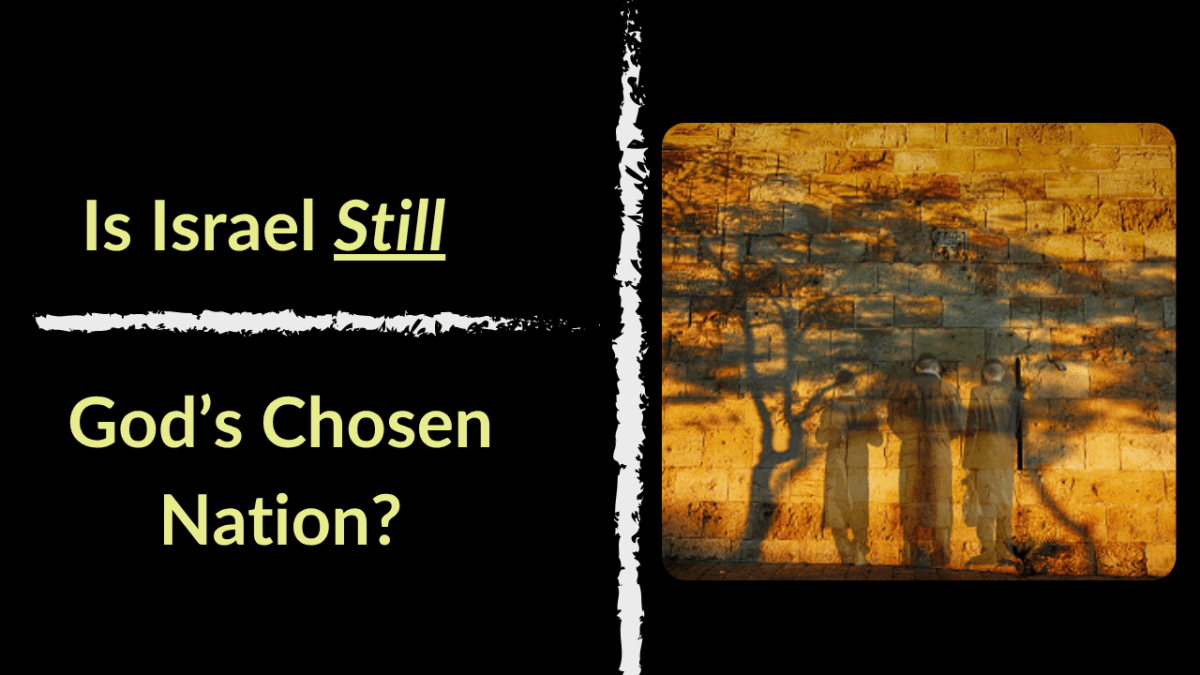
  • I believe that the current nation of Israel is a counterfeit, and that the NT authors clearly redefined “Israel” as all who follow Christ and place themselves under new the covenant that he both instituted and presides over.

I could go on, but this is only meant to prove a point.

I arrived at these conclusions based on an in-depth study of Scripture, reading and/or listening to other thinkers, and weighing out the logical considerations.

Here’s the thing: others can follow the same steps and come to entirely different conclusions.

Well intentioned, thoughtful people can research the same biblical concepts—with an open mind—and simply differ with my beliefs. Now, people typically disagree on doctrine because one of the two (or both) didn’t pursue the topic in a comprehensive and honest way. However, disagreements still happen at times even when they do.

One more wrinkle that must be considered is that Scripture testifies that most people will not be saved. Jesus stated this plainly:

Jesus even addressed this concerning the many who will believe they are following him, but were indeed never part of his Kingdom:

This, friends, explains how some can be involved within the church throughout their entire lives and never know the Lord. Whatever works, effort, and involvement they displayed is rendered useless in the end.

But how can that be?

______________

A Cloud of Confusion

Let’s be clear about what has been said to this point. Two things about salvation need to be understood within this article, so let me plainly summarize them here:

  1. All people will be judged differently, based on their personal abilities and their capacity to understand reality.  
  2. Most people will not be saved, even many who claim to be believers.

Keep these two points in mind as we continue.

Now, all this might lead us to think that salvation is a far more difficult matter to contend with than previously thought. Rather than clearing anything up, it may feel like I have simply created a larger and more ominous cloud of confusion!

If the story ended here, then that would no doubt be true. Thankfully, it does not.

Indeed, there is a way to cut through all this and point to what is truly imperative in the process—yes, the process—of salvation.

______________

The Truth Seeker Will be Saved

When you get to the heart of the matter—fully understanding that human beings do have a part to play in their own salvation—Scripture and logic meet to point the way forward.

At the end of the day, there is only one thing that can make sense of how people who vary so dramatically regarding background, ability, intelligence, life circumstances, era, and so much more, can all be equally (and fairly) judged. Likewise, only one thing accounts for why so many can profess Jesus as Lord but still be condemned at the end.

It all comes down to this:

The pursuit and acceptance of the truth.

Please note that, within this one explanation, there are two parts. The first part is about the pursuit of truth. That is, are we genuinely seeking to understand reality, particularly as it pertains to our faith? Do we vigorously study Scripture, investigating how it relates to the world around us? Are we frequently in prayer and spiritual contemplation? Are we searching for the truth?

Are we trying—to the best of our ability—to understand the truth in all aspects of life?

The second part of this is equally important but is dependent upon the first. Are we willing to accept the truth when it is revealed to us? Are we able to change our views if it’s discovered that we are in error, or are we too proud to do so? Do we care more about what we already believe than what is true? (Read that last question again)

Are we trying—to the best of our ability—to embrace and apply the truth in our lives?

Truth, friends. Pursue and accept the TRUTH!

This is why Jesus literally called himself “the truth” in John 14:6:

Embracing Jesus is to accept the plainest representation of truth ever divulged to humanity. Alternatively, to deny him is to reject the plainest representation of truth ever divulged to humanity. Not surprisingly, Satan is alternatively called the “father of lies” (Jn. 8:44). That is, he is the opposite of the truth: the opposite of Christ!

Along these lines, do you recall what Jesus called the Holy Spirit?

Yes, the Holy Spirit is the Spirit of Truth.

Elsewhere, Scripture repeatedly speaks about our acceptance of the truth as the pivotal issue at stake. In talking about the last days and the coming of the “lawless one,” Paul said this concerning those who will be condemned:

In 2 Timothy 4:3-4, we read this about the world as we move toward the last days:

Do you understand this message? Believe me, this theme is carried out within the entire body of Scripture.

Our pursuit and acceptance of the truth is what cuts through all other considerations. It is what separates the wheat from the chaff.

_____________

Conclusion

Our pursuit and acceptance of the truth is no doubt why Scripture often reminds us that God judges the heart (1 Sam. 16:7, Jer. 17:10, Mt. 5:8). Put another way, God judges our intentions, motives, effort, and what we are about at the deepest, inward levels.

All this can make sense of several things that, on the surface, may seem illogical. For example:

  • How someone who struggles more with sin than another person can be saved just the same.
  • How two people can be saved, despite having completely different levels of understanding about the Bible, the world, and all else.
  • How a person can have greater works than another, though he is unsaved and the one with fewer works is saved.
  • How someone who spends their entire life in “service” to the church can still be condemned at the end.

Do you now understand how all this can be the case? Do you see why this issue—the issue of truth—pierces through the confusion?

Everyone has the ability to either pursue or flee from the truth.

Everyone has the ability to either accept or reject the truth.

These two fundamental realities cut across all other barriers: those of knowledge, intelligence, gender, age, race, nationality, era, and everything else.

This is precisely why all people will be without excuse (Rom. 1:20), and why no one will be able to plead ignorance at the Judgment. No one will get a pass for refusing to search out the truth or for failing to follow it.

No one will be saved or condemned based on factors beyond their control, but only on their pursuit and acceptance of the truth.

Again, this does not mean that those who are saved understand everything there is to understand, nor does it reduce salvation to a matter of knowledge. In fact, this is exactly the opposite of the case I have been making! Salvation is case dependent and assessed on an individual basis, just as Scripture reveals (Rev. 22:12, Mt. 16:27, Rom. 2:6-8).

Each person will be judged according to their desire to know the truth and their obedience in following it.

In an attempt to drive this home one last time, consider the types of things that passionately pursuing and embracing the truth would lead to:

  • The understanding that Jesus is the Messiah, the Way, the Truth, and the Life. Jesus is the Son of God and our only atonement for sins.
  • A greater knowledge about the evil workings of our world and the depths of its depravity.
  • The desire and ability to search oneself, making every effort to be obedient to Christ.
  • A genuine sense of open-mindedness and a willingness to reform our own views, even changing them when necessary. No doctrine or belief will be held as more sacred than our commitment to the truth.

So much more could be said, but the underlying message in all this should be clear . . .

The truth seeker will be saved.

If this does not challenge you to evaluate your own salvation—hungering to both pursue and embrace the truth in all aspects of your life—then I fear that nothing will. I pray that you will not miss this clear message and the opportunity in front of you.

In closing, remember the very words of our Lord:

(Please check out my corresponding video and consider reading this blog if you found this helpful.)

References


[1] John 8:31-32, my emphasis.

Nimrod: Man of Mystery (Revealed)

This article is part of a larger project that I am working on. As such, this is a more in-depth read than my usual blogs. This will provide you with a deeper level of information than most anything else that you might read about Nimrod.

In the first section, I discuss the character of Nimrod, his origins, and his dark connection with evil throughout the ages. In part two, I will reveal his role within the very fraternity that presently runs our world.

Believe me, there is far more involved with Nimrod than most of us ever imagined.

______________

Nimrod’s History and Dark Connections

Both the Bible and other historical sources attribute the construction of Babel—the precursor to Babylon—and its tower to a certain earthly leader of the day. His name lives in infamy and, like the thought of Babylon, survives to this day.

This man’s name was Nimrod.

In Scripture, Nimrod was the great grandson of Noah and is described as “the first on earth to be a mighty man” (Gen. 10:8).[1] He is also described as being a “mighty hunter before the Lord” (10:9) which, in the original language, may imply defiance against God.[2] We also read that Nimrod was credited as the chief builder of far more than just Babel:

In essence, Nimrod has been viewed as a larger-than-life figure in the biblical narrative. This may literally be true, as his stature has suggested a lineage back to the Nephilim (the giants of old).

The name “Nimrod,” while being somewhat dubious, is associated with the word “rebel.” Fundamentally, Nimrod was a rebel against God. However, things get far more interesting from there. This name is also possibly associated with Marduk, who was an ancient Mesopotamian god and the patron deity of the city of Babylon. As we will see in the writings of Josephus, this is consistent with everything else that is known about Nimrod. More interesting, it is likely that the Semitic root of this name is connected to Namra-uddu,[3] which was thought to be a star god.

Did someone say, “a star god”?

Where have we heard this before? That’s right: Lucifer is referred to as the “son of the morning” (or literally, “shining one”) in Isaiah 14:12. The “shining one,” as in a star that is also historically connected to the planet Venus. As Benson’s Commentary puts it: “Lucifer is properly a bright star, that ushers in the morning.”[4]

Yet another layer to this is that the so-called “Star of David” is—unbeknownst to most of the sleeping world—a pagan (read, Satanic) symbol that is historically and biblically associated with a god called “Remphan” (or, Rephan). Biblically, this name was first mentioned in Amos 5:26, where most translations render it as “the star of your god.” The Septuagint,[5] however, translated this verse as, “the star of your God Rephan.”

It is no surprise, then, that the Book of Acts later makes the identity of this pagan deity clear to its readers: “You took up the tent of Moloch and the star of your god Rephan, the images that you made to worship; and I will send you into exile beyond Babylon” (7:43, my emphasis).

Not only is Nimrod’s existence and treachery evident within Scripture, but it is also verified in the writings of the Jewish historian, Flavius Josephus. Here is a carefully selected passage containing key insights about Nimrod, his role in Babel, and his overall place in Jewish history. While lengthy, rest assured that it is tremendously important:

If you thought that Nimrod was only found within the Bible, you now know differently. The most famous historian of the first century—who is renowned within all of history—described exactly who Nimrod was, and it’s completely consistent with what is revealed in Scripture.

______________

Nimrod: The First Antichrist

Josephus’ words powerfully add to the information we have already evaluated. When combined, all this leads to a very sinister and disturbing conclusion. Nimrod is both historically and etymologically connected to some of the darkest spiritual figures in all ancient history. In fact, Nimrod can be directly connected to Lucifer himself.

Remphan . . . the “star god” . . . the “shining one” . . . all are related to Nimrod.

It was Nimrod who defied God and served as the chief architect of the infamous Tower of Babel. He was instrumental in the building of “. . . Babel, Erech, Accad, and Calneh, in the land of Shinar. From that land he went into Assyria and built Nineveh, Rehoboth-Ir, Calah, and Resen between Nineveh and Calah” (Gen. 10:10-12). His work in Babel and its “tower” laid the groundwork for what would become Babylon, and Babylon would go on to symbolize Satan’s dark kingdom made manifest on earth.[7]

In this sense, Nimrod served as the first and highest human representative of Lucifer’s global empire. Are you grasping the magnitude of this observation? If not, let me clearly and emphatically state the essence of the situation.

Nimrod was the first Antichrist figure in history.

Nimrod was an Antichrist before there was the Christ. However, there is even more to this. Nimrod is to this nefarious character what Babylon is to evil empires. Put succinctly, Nimrod is the symbolic embodiment of the Antichrist for all the ages.

______________

Nimrod : Alive and Well

The significance of this horrific figure goes far deeper than what has already been revealed.

Nimrod is not simply a biblical character, or one bound up within Jewish lore. He is no mere “builder” of cities or just another “rebel” against God. Nimrod is even more than the Antichrist of the ancient world and its symbolic figurehead. Shockingly—but also fittingly—Nimrod is the very figure that the Freemasons admire and celebrate as their first Grand Master. That’s right: their first Grand Master. In this sense, he is both the first great Mason and the fraternity’s most important figure.

Worse, the entire system is hidden beneath Christian trappings. Like Lucifer—the god of Freemasonry—the fraternity masquerades in the garments of righteousness. As such, their darkest truths are hidden while their lies are projected.

Part of the “Christian trappings” of Freemasonry can be seen in their assertion that King Solomon, rather than Nimrod, was the first Grand Master.[8] Freemasonry has adopted much from Jewish tradition and consistently uses its characters, structures, and events to camouflage its evil interior. Even sources that attempt to refute Nimrod’s connection to Freemasonry sometimes admit that their “old legendists”—collectively called the “Legend of the Craft”—affirmed his place in their history:

As stated, Freemasonry proper has always held that Nimrod was the fraternity’s first Grand Master.

There is, of course, further evidence of Nimrod’s status within the history and practice of the Masons. In the initiation of the candidate into Freemasonry—called the Apprentice Degree (1st)—candidates take what is called the “Oath of Nimrod.”[10] In this, the candidate pledges an oath that they will not reveal any possible aspect of the innerworkings of the Masonic fraternity to those on the outside. The consequences of doing so are clearly described, as to deter those who might think to break their oath:

In Arcane Schools—“arcane” meaning “mysterious” or “secret”—John Yarker further describes the place that Nimrod holds in Masonic history. First, he reveals that:

Connected to this, Yarker later continues by saying: “For some hundreds of years our (the Freemason’s) Constitutions have asserted that Nimrod was a Grand Master and gave the Masons a Charge which we still follow.”[12] That “charge” they still follow is none other than the Oath of Nimrod.

If we knew nothing else about the Freemasons, this should be enough to see the darkness hiding behind the “world’s oldest, largest, and most charitable fraternity.”[13] They admire—even esteeming him as the first to hold the sacred status of Grand Master—the man whose name lives in infamy: Nimrod.

Yes, the very man who is credited for the construction of the singular evil empire whose treachery stretches into the last days; the figure who led the campaign to erect a tower into the heavens and defy God; the one whose name shares roots with pagan deities and Lucifer himself; the one who is, in effect, the world’s original Antichrist; this is the very same Nimrod who sits atop the grand hierarchy of the fraternity that now runs our world.

____________

Conclusion

It is apparent that there is far more to Nimrod than meets the eye, and much more could be said. Hopefully, the mystery behind the man has now been revealed to you.

Nimrod was the master architect of the first civilizations after the Flood. He was the “chief builder” and the man behind humanity’s greatest primitive effort to usurp its Creator. He is the man whose very name is connected to Lucifer himself.

As such, he not only stands as history’s first Antichrist figure but also as the prototype for those who came after . . . and the one who is yet to come. This is precisely why the Freemasons have historically viewed him as their most central and significant human leader, despite their modern efforts to distance themselves from him.[14]

Now, this very fraternity builds their next city of Babel—their great “Babylon”—complete with a Tower built into the heavens, a plan to rule humanity, and the audacity to defy the Most High once and for all.

But that, dear friends, will have to wait until a later time.

(If you enjoyed this, please see my other materials about the Freemasons and my extensive video that reveals their plan for our world.)

References


[1] This may also be rendered, “he began to be a mighty man on earth.”

[2] See Barne’s Notes on Genesis 10:9.

[3] See the Brown-Driver-Briggs explanation of “Nimrod” in Strong’s, 5248.

[4] See Benson’s Commentary on Isaiah 14:12-14.

[5] The Septuagint is the earliest extant (surviving) Greek translation of the Hebrew Bible, or the Old Testament. 

[6] Antiquities of the Jews — Book I. Chapter 4, sections 2-3 (my emphasis).

[7] This is evident in several ways. Ancient Babylon destroyed God’s temple and took the Jews captive into exile in 586 BC. Since then, it became the epitome of all truly wicked empires. Peter referred to Rome as Babylon (1 Pet. 5:13), and Revelation even referred to the final evil empire as “Babylon” (cc. 17-19).

[8] See Universal Co-Masonry’s, “The Legend of Nimrod.”

[9] Ibid.

[10] See Churchward’s The Arcana of Freemasonry, “Candidate Signs of the O.B.”

[11] See Chapter VI, “The Mystic and Hermetic Schools in Christian Times” (182).

[12] Ibid.my emphasis.

[13] This is a common boast of the Masons. See C.S.T.’s “Becoming a Mason,” for an example of this.

[14] See Universal Co-Masonry’s, “The Legend of Nimrod.”