
–
It is no mystery that things are out of sorts in our world today.
Who am I kidding? Things are a disaster.
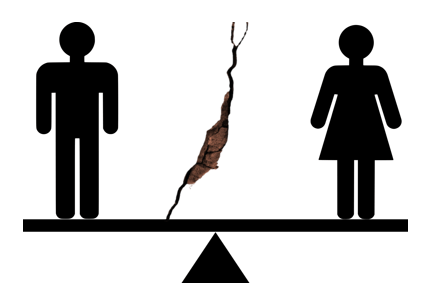
Perhaps nowhere is this more evident than in the way that male and female roles are displayed. The carnage produced affects literally every aspect of society but let’s simply look at marriage for a moment.
Currently, the divorce rate for first-time marriages in the US is right about 50% (plus or minus).[1] That has been known for some time now. Something lesser known is the mess that ensues after one has divorced. While some believe that subsequent marriages tend to fair better—as the people involved are assumed to be more mature, more experienced, more knowledgeable about what they want, and so forth—this could not be farther from the truth. Second marriages, in fact, have a failure rate of 67%, with divorce being the obvious outcome.[2]
Somehow, it gets worse from there. Those willing to brave “walking down the aisle” for a third time would only find success against all odds; amazingly, about 73% of third marriages now end in divorce.[3] Is it even necessary to evaluate fourth or fifth marriages? Clearly, we can see where the trends take us.
Perhaps more disturbing is that we are now seeing a world in which roughly 80 percent of divorces—yes, four out of every five—are initiated by the female partner. This is possibly a conservative estimate, as the number is recorded to be even higher among college-educated women.[4] These are eye-popping numbers, no matter how you look at it.
This is just the tip of the iceberg—as the problems among the unmarried are far too numerous to divulge here—but this should prove the point.
Something is terribly wrong with the way men and woman are getting along (or aren’t, as it were).
With this said, it seems appropriate to discuss the way that the Bible describes gender roles, particularly the way it talks about women. Clearly, this will also tell us much about men. In this article, I will tackle these important issues and hopefully bring some clarity to them.
The Created Order
Though both are equally human, men and women are not the same and are not intended to do all the same things. This was clear from the onset:
“Male and female he created them, and he blessed them and named them Man when they were created.”
Both were human and made in God’s image, but some are “man” and others are “woman.” When we read back further in Genesis, we see a very clear picture of how the relationship between the two was supposed to function. After creating Adam (“man” or “mankind”), God quickly saw fit to add another type of human to the mix:
“Then the Lord God said, ‘It is not good that the man should be alone; I will make him a helper fit for him.’ Now out of the ground the Lord God had formed every beast of the field and every bird of the heavens and brought them to the man to see what he would call them. And whatever the man called every living creature, that was its name. The man gave names to all livestock and to the birds of the heavens and to every beast of the field. But for Adam there was not found a helper fit for him. So the Lord God caused a deep sleep to fall upon the man, and while he slept took one of his ribs and closed up its place with flesh. And the rib that the Lord God had taken from the man he made into a woman and brought her to the man” (Gen. 2:18-22, my emphasis).
Note that on two occasions, the woman (Eve) was called a “helper” to Adam. This is critical.
A Strong’s points out, the Hebrew word ezer—meaning “help,” “helper” or “support”—is used in the Bible to denote assistance, support, or help.[5] However, it also adds another critical aspect of this term, which is that it “conveys a sense of strength and support, rather than subordination or inferiority.” In essence, we learn in Genesis that God’s original intent in creating women was that they should provide aid and support to men; they are to be “helpers.” Women were indeed created to assist men and to join them as being one flesh.
Women were not made to rule over men but to join forces with them.
Women were designed to be helpmates for men, for Eve came from Adam. This will come up again shortly. However—and this cannot be missed—this role does not imply lowliness or a lesser degree of humanity.
Female Roles in the New Testament
The apostle Paul had much to say about the relationship between men and women within the confines of the marriage covenant. In 1 Corinthians 7:3-4, he describes the type of union the two are to have:
“The husband must fulfill his duty to his wife, and likewise the wife also to her husband. The wife does not have authority over her own body, but the husband does; and likewise the husband also does not have authority over his own body, but the wife does.”
First, note something that is often missed: the husband has authority over the woman’s body and, likewise, the woman has authority over the man’s body. Neither have ownership over themselves within the marriage covenant; they exchange this with one another.
This is central to the notion of the two becoming one flesh, as we saw in the Creation narrative. Jesus reaffirmed this reality in his teachings (Mk. 10:8), as did Paul elsewhere (Eph. 5:31).
Additionally, the context of this teaching in 1 Corinthians 7:3-4 involves sexual interactions. Both husbands and wives are commanded—yes, commanded—to fulfill one another sexually (7:5). Neither the husband nor the wife is permitted to lord such interactions over the other. Failing to have sexual relations within the marriage is literally to go against the very commands of God, as given through the apostle Paul.
Elsewhere, Peter gives a lengthy set of commands to men and women within the marriage covenant. After addressing the importance of inward qualities and obedient, godly behavior in women (1 Pet. 3:1-4), Peter addresses the nature of the relationship between men and women:
“For in this way the holy women of former times, who hoped in God, also used to adorn themselves, being subject to their own husbands, just as Sarah obeyed Abraham, calling him lord; and you have proved to be her children if you do what is right without being frightened by any fear. You husbands in the same way, live with your wives in an understanding way, as with someone weaker, since she is a woman; and show her honor as a fellow heir of the grace of life, so that your prayers will not be hindered.”
There is much here that could be discussed, but a couple items must be addressed. Women are commanded to be “subject” to their husbands, just as Sarah was to Abraham. On the other hand, men were commanded to treat their wives in an understanding way, having a full grasp of both her created role and her nature. Lastly, note that Peter also called a woman a “fellow heir,” speaking to their equality in salvation and their value before God.
All this is directly in line with the created order of things and the very concept of women being made as “helpers” to men: equally human, Image-bearing helpers. There is more to say in this regard, but I will cover this later when discussing gender roles in the church.
A Quick Note on the State of Marriage
Marriage is a physical union of two lives but, more importantly, it is supposed to be the spiritual union of these lives. The husband and wife have entered a binding covenant not only with one another but also with God. This was established in Creation itself, and Jesus affirmed this sacred covenant during his ministry:
‘Therefore a man shall leave his father and mother and hold fast to his wife, and the two shall become one flesh.’ So they are no longer two but one flesh. What therefore God has joined together, let not man separate” (Mk. 10:7-9).
Yes, “one flesh.” This was the intention from the beginning, but so were appropriate male and female roles.
Clearly, neither are now intact.
It’s abundantly obvious that many couples who enter marriage do so without ever inviting God into the relationship. Statistically, this is undeniable. A 2018 study showed that the number of marriages that take place at or within a church had dropped by half within the last decade alone.[6] It found that religious venues only hosted about 22 percent of weddings in 2017, which was down a whopping 41 percent since 2009. Instead, banquet halls, hotels, country clubs, wineries, rooftops and museums saw most couples say, “I do.”
Indeed, God has been thrust out of marriages. Is it any wonder why most either fail or operate miserably?
Women in the Church
Without question, this may be the most debated aspect of gender roles within the NT today. The church, at large, has mightily struggled to make sense of these roles. Worse, many have functioned in outright rebellion to what Scripture reveals.
On the one hand, women are given tremendous authority within the church. On the other hand, they are not given unlimited authority. Put another way—and just as it is in most other areas of life—men are largely empowered to lead, and women are empowered to support them in this endeavor.
In his first letter to Timothy, Paul gave instructions that have troubled some—most of whom being female—for two thousand years:
“I do not permit a woman to teach or to exercise authority over a man; rather, she is to remain quiet. For Adam was formed first, then Eve; and Adam was not deceived, but the woman was deceived and became a transgressor” (1 Tim. 2:12-14).
First, the text says what it says; it’s part of Scripture and is the truth. Second, we must understand what was really intended. The word translated here (authenteó) as “exercise authority” means to dominate, govern, or have mastery over. Most specifically, it refers to “one who acts on his/her own authority” or “an absolute master.”
This is exactly the female role that is forbidden throughout all of Scripture—a woman having power and control over a man within a relationship or spiritual endeavor. There is no discrepancy at work here. There should be no domination or mastery. This also fits exactly with what Peter revealed (above) when said that wives should be “subject”—that is, under obedience—to their husbands.
Note that both Paul and Peter ground these ideas in Genesis: Paul referencing the serpent’s deception of Eve, and Peter describing Sarah’s obedience to Abraham. Not only does this show that male/female roles were set from the earliest time, but also that Scripture is consistent throughout on the matter.
Still, women are elevated to high levels throughout the NT as well and are equally critical members within the church. Many women followed Jesus and assisted in his ministry, such as Mary Magdalene and sisters, Martha and Mary. After Emperor Claudius’ Edict of Expulsion and the church was held covertly in house churches, women often organized the gatherings. Women held prayer meetings (Acts 16:13) within the early church and even prophesied (Lk. 2:36-38). Further, women financially supported the church in crucial ways (Rom. 16:1-2).
In the OT, a woman (Deborah, Jg. 4-5) served as a faithful and successful Judge within Israel. Moreover, women were often instrumental in moving God’s plans forward in a host of ways, such as Rahab’s assistance of the Jewish people in Jericho (Jos. 2). In fact, there are far too many examples of prominent women in Scripture to list here but see this article for more.
Oh yeah—did I mention that women birth the children and are instrumental in their development? That seems rather important and worth considering.
Conclusion
I realize that there is a tremendous amount more that could be said, but this article would stretch beyond readability. I do, however, plan to cover this—and much more—in an upcoming book.
In what has been said, I hope some things have become clear. The first thing is that the notion of women being in control of men is clearly prohibited. Men were created to lead, and women were created to follow and support them. However, we undoubtedly live in a world where this is seldom the case. There are just so many reasons for this, and a comprehensive discussion would include the role that feminism has played in society, the effects of dating apps and social media, and the overall godlessness that now exemplifies our culture.
Overall, the problem is best seen in the elevation of women and the devaluation of men. And be sure of this: both genders have joined forces (for once) to create this cataclysmic situation.
As I often say, most men cannot lead . . . and most women would never let them.
Second, it is clear that men and women are also set to occupy different roles within the church. Women are not permitted to hold authority over men, which certainly means leading the congregation as something like the lead pastor, bishop, superintendent, and other positions of high authority (which are worth discussing internally). However, women are a crucial part of the church; they organized prayer meetings, hosted house churches, prophesied, showed feminine hospitality, supported the leaders of the church, and most definitely are critical in the task of raising/leading children.
Finally, the Bible is clear throughout that men and women are both made in the image of God and, as such, are equally human and have equal value before both God and man.
When men and women fill their created roles and come together in submission to God, beautiful things can happen. Relationships can prosper. Families can flourish. The church can be strong and resilient. Life can be fulfilling, and societies can prosper.
If only we lived in a time when this happened with any regularity.
In closing, I leave you with these exhortations, and I can only pray that you follow them. Men—be men. Women—be women. And may all serve the Lord Jesus Christ in solidarity.
–
[1] Bieber, “Revealing divorce statistics in 2024.”
[2] Ibid.
[3] Ibid.
[4] See Yenor’s article, “Divorce and Toxic Femininity.”
[5] See Strong’s, “ezer” (5828).
[6] See Lupfer, “Fewer couples are marrying in churches. Does it matter?”
 Angels-Aliens